
Adjunct Faculty
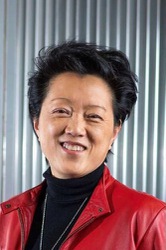
Mei Cai, Adjunct Professor
Dr. Mei Cai is currently serving as the Senior Director of Battery Electrochemistry and Analytics at
Fluence, a Siemens and AES company. She was the Director of Battery Materials and Systems
Research at General Motors Global Research and Development Center, where she is responsible for
innovations in advanced battery technologies for future electric vehicles. Mei has 29 years of
industrial R&D experience including extensive experience in novel materials processing for
automotive applications. She is the author or co-author of 130+ scientific publications and holds
more than 150 issued US patents. Her research has received more than 18,000 citations and has an
h-index of 67 (Google Scholar).
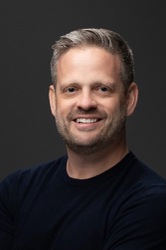
Jason Carroll, Adjunct Professor
Jason Carroll is the enterprise vice president of advanced manufacturing at Eaton Corporation, a $120B global leader in intelligent power management. Reporting to the Enterprise Chief Supply Chain/Manufacturing and Chief Technology Officers, he oversees the deployment of automation, robotics, additive manufacturing, materials science, and digital systems in Eaton’s operations and product development. Jason earned his Ph.D. in Materials Science and Engineering from the University of Michigan. His research interests are in hierarchical fatigue mechanisms, multi-objective optimization, and generative artificial intelligence. He believes the successful companies of the 21st century will be digital organizations with connected, agentic based systems, for rapid design and product customization.

Raymond Decker, Adjunct Professor
(734) 995-5550
Alloy design and materials processing are the major fields of interest. Nickel-base superalloys, very high strength Maraging Steels and Magnesium alloys are subsets of this focus. Injection molding of Magnesium alloys is a speciality in the technology of materials processing.
Biomaterials and Highway Research have been additional topics of specialization.

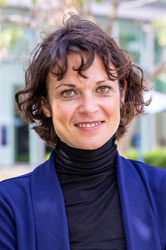
Claudia Loebel, Adjunct Professor
Our work is inspired by the interface between materials science and regenerative engineering to address specific problems related to tissue development, repair, and regeneration. By developing mechanically and structurally dynamic biomaterials, microfabrication, and matrix manipulation techniques we aim to recreate complex cell-matrix interactions and model tissue morphogenesis and disease. The ultimate goal is to use these engineered systems to develop and translate more effective therapeutic treatments for diseases such as fibrotic, inflammatory, and congenital disorders. Our work currently focuses on developing engineered lung alveolar organoids, aiming to build models of acute and chronic pulmonary diseases and for personalized medicine.